Obarrio, Panama City: What It’s Like to Live in the Center
Want to live within walking distance of everything and never touch a highway? Panama Elite Homes represents buyers across every central Panama City district — from Obarrio to Bella Vista, Marbella, and Punta Pacifica — with independent pricing, title verification, and a straight answer on what a building actually carries with it.
Ask five different people in Panama City where Obarrio starts and ends, and you’ll get five different answers. That’s not a knock on the neighborhood — it’s a symptom of how central it is. Obarrio sits so close to the geographic middle of Panama City’s banking corridor that its borders blur into Bella Vista on one side and Marbella on the other, and most residents don’t spend much time worrying about the exact line. What they care about is that Via España, Calle 50, and Cinta Costera are all a short walk or a five-minute drive away, and that a two-bedroom apartment here still costs meaningfully less than the same unit in Punta Pacifica or Costa del Este.
This guide covers where Obarrio actually sits, what daily life feels like, what property costs in 2026, and how it stacks up against the neighborhoods it’s most often confused with or cross-shopped against.
Table of Contents
- Where Obarrio Sits, and Why It’s Different
- The Character of the Neighborhood
- Housing Stock: What You’re Actually Buying
- Obarrio Property Prices in 2026
- Daily Life: Restaurants, Amenities, and Getting Around
- Obarrio vs. Bella Vista vs. Marbella vs. El Cangrejo
- Who Obarrio Suits — and Who It Doesn’t
- Buying in Obarrio as a Foreigner
- Frequently Asked Questions
Quick Answer: What Is Obarrio, Panama City?
Obarrio is a high-density, high-rise neighborhood in the geographic center of Panama City, wedged between Via España to the north and Calle 50’s corporate corridor to the south, bordering Bella Vista to the west and Marbella/Campo Alegre to the east. It’s best known as an extension of the banking and financial district, with apartment towers sharing blocks with bank headquarters, law firms, clinics, and hotels. It’s roughly 10 minutes to Cinta Costera and the Pacific waterfront, and walking distance to Multiplaza and Multicentro malls. Property runs from around B/.1,700/m² in older towers to B/.2,800–3,200/m² in renovated or newer buildings, meaning a typical two-bedroom apartment lands somewhere between $140,000 and $320,000 depending on the building’s age and finish level. It is not a resort neighborhood — it’s a working, urban, walkable district built for professionals who want to be near everything.
Where Obarrio Sits, and Why It’s Different
Obarrio doesn’t show up on a map with a hard boundary the way a gated suburb would. It’s a dense grid of streets running roughly between Via España and Calle 50, just east of Bella Vista and just west of Marbella and Campo Alegre — close enough to all three that real estate listings routinely get filed under the wrong neighborhood name. What’s not in dispute is the location’s core advantage: Obarrio sits almost dead-center in Panama City’s banking and business district, within a short walk of Via España’s shops and restaurants, a five-minute drive from the Cinta Costera waterfront promenade, and close enough to Multiplaza Pacific and Multicentro that a car isn’t strictly necessary for day-to-day errands.
That centrality is Obarrio’s entire pitch. Where Punta Pacifica and Punta Paitilla sell ocean views and prestige addresses, and Costa del Este sells master-planned order, Obarrio sells proximity — to work, to the metro, to restaurants, to hospitals. It’s a neighborhood built by density and demand rather than by a single developer’s master plan, which is part of why the building stock is so mixed: 1980s concrete towers stand next to glass-fronted 2020s developments on the same block.
The Character of the Neighborhood
Obarrio reads as urban and efficient rather than leafy or residential. Street life during business hours is busy — bank employees, lawyers, and clinic staff moving between office towers and lunch spots — and it quiets down in the evenings and on weekends, though less dramatically than a pure financial district would, since a large resident population keeps restaurants and pharmacies open late.
It’s a vertical neighborhood. There’s limited green space and few single-family homes; almost everyone here lives in an apartment tower, and the towers range widely in age, height, and finish quality. That mix is a double-edged feature: it keeps entry prices accessible relative to Panama City’s premier addresses, but it also means due diligence on a specific building matters more here than almost anywhere else in the city. A well-maintained 1990s tower and a neglected one sitting two blocks apart can carry very different costs in HOA fees, structural condition, and resale value.
Demographically, Obarrio skews toward young and mid-career professionals — bankers, lawyers, consultants, medical staff working at the nearby Paitilla Medical Center — along with a steady population of long-term expats who value the walkability over a beach or golf-course lifestyle. Families with school-age children are less common here than in San Francisco or Costa del Este, mainly because green space and international schools sit outside the immediate neighborhood.
Housing Stock: What You’re Actually Buying
Obarrio’s building stock splits into three broad tiers, and understanding which one you’re looking at matters more than the neighborhood name on the listing.
Older concrete towers (1980s–1990s). These make up a large share of Obarrio’s inventory. Units tend to run larger on paper — 120–180 m² for a two- or three-bedroom layout was standard construction practice at the time — but finishes are dated unless a previous owner renovated. HOA fees are typically lower, and so is the entry price, but buyers should budget for eventual building-wide capital repairs (roofing, elevators, façade work) and confirm the building’s reserve fund status before closing.
Mid-market renovated and 2000s-era buildings. This is where most of Obarrio’s transaction volume sits today — buildings with updated lobbies, modern elevators, a pool or small gym, and unit interiors that have been renovated by a prior owner or the original developer. Two-bedroom units in this tier typically run 90–130 m².
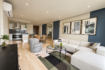
Newer developments (2015–present). A smaller but growing slice of the market, these buildings compete directly with towers in neighboring Marbella and Bella Vista on amenities — rooftop pools, coworking lounges, gyms, sometimes a small business center — and price accordingly. Unit sizes tend to run smaller and more efficient (60–110 m² for one- and two-bedroom layouts), reflecting current buyer demand for lock-and-leave apartments over sprawling floor plans.
Obarrio Property Prices in 2026
Here’s what buyers are actually paying, based on recent listings across Obarrio’s three building tiers.
| Segment | Typical Size | Indicative 2026 Price Range | Notes |
| Older tower, unrenovated | 100–150 m² | $95,000 – $165,000 | Lowest entry point; budget for building-wide capital repairs |
| Older tower, renovated | 100–150 m² | $150,000 – $230,000 | Best value-to-space ratio in the neighborhood |
| Mid-market building (2000s) | 90–130 m² | $180,000 – $320,000 | Largest share of current listings |
| Newer development (2015+) | 60–110 m² | $210,000 – $420,000 | Smaller units, amenity-driven pricing |
| Penthouse / top-floor premium | 150–250 m² | $450,000 – $850,000+ | Limited supply; mostly in newer towers |
Note on figures: these are indicative 2026 bands drawn from live listings, not a fixed price list — building age, floor level, and renovation status move the number for any individual unit. Confirm current pricing on a specific listing with our team before budgeting.
For context, per-square-meter pricing in Obarrio’s renovated and mid-market stock generally lands around B/.1,700 to B/.2,545/m², which puts it meaningfully below the B/.2,800–4,200/m² range commanding in Punta Pacifica, Punta Paitilla, and top Avenida Balboa towers — one of the clearest reasons buyers who want central-city access without central-city pricing gravitate toward Obarrio.
Daily Life: Restaurants, Amenities, and Getting Around
Obarrio’s biggest practical advantage is that almost nothing requires a long drive. Via España runs along the neighborhood’s northern edge with banks, pharmacies, casual restaurants, and everyday retail. Calle 50 to the south is Panama City’s dense corporate corridor — office towers, more restaurants, and direct access into Marbella. Multiplaza Pacific and Multicentro, two of the city’s largest malls, are both within a short drive or a manageable walk depending on which block you’re in.
The area is well served by metro access — the Metro Line 1 corridor runs close enough to put several stations within walking distance, which is unusual for a neighborhood this central and is a genuine differentiator versus Punta Pacifica or Costa del Este, neither of which has direct metro access. Grocery stores, clinics, gyms, and pharmacies are embedded throughout rather than clustered in one commercial zone, so day-to-day errands rarely require a car.
What Obarrio doesn’t have is much green space. There’s no beach, no golf course, and only modest park access compared to neighborhoods like Costa del Este or the Amador Causeway. Residents who want that lifestyle tend to drive the ten minutes to Cinta Costera for waterfront walking and cycling paths rather than finding it inside the neighborhood itself.
Obarrio vs. Bella Vista vs. Marbella vs. El Cangrejo
Obarrio is frequently cross-shopped against its immediate neighbors, and the differences are real even though the four districts sit within a few blocks of each other.
| Neighborhood | Character | Typical $/m² | Best For |
| Obarrio | Dense, financial-district-adjacent, mixed-age towers | ~$1,700–2,545/m² | Professionals wanting central access at a mid-market price |
| Bella Vista | More residential, walkable, tree-lined streets | ~$1,700–2,800/m² | Retirees and families wanting a quieter central address |
| Marbella | Corporate, high-rise, strong short-term rental demand | ~$2,000–3,200/m² | Investors targeting rental yield near the business core |
| El Cangrejo | Local, lived-in, close to universities and Via Argentina | ~$1,600–2,400/m² | Buyers who want an authentic, non-touristy central feel |
The short version: Obarrio and El Cangrejo compete on affordability and centrality; Bella Vista wins on walkability and a more residential feel; Marbella wins on rental yield and corporate proximity, at a premium. None of the four offer ocean views the way Punta Pacifica or Punta Paitilla do — that trade-off is the price of being this close to the center.
Who Obarrio Suits — and Who It Doesn’t
It suits you if…
- You want to walk to work, the metro, and everyday errands without owning a car full-time.
- You’re buying a first apartment or an investment property and want the lowest entry price still inside Panama City’s central corridor.
- You value proximity over view — Obarrio has almost no oceanfront inventory, and that’s reflected in the price.
- You’re comfortable doing building-specific due diligence rather than relying on the neighborhood name alone.
It does not suit you if…
- You want ocean views or beachfront access as part of daily life — see our guides to Punta Pacifica or Avenida Balboa instead.
- You want a quieter, more residential, tree-lined street to come home to — Bella Vista or San Francisco fit that description better.
- You’re raising school-age children and want green space and family infrastructure close by — Costa del Este or San Francisco are typically the better fit.
- You want a resort or mountain lifestyle rather than a dense urban one — see our Cerro Azul or Coronado guides for the rest of the country.
Buying in Obarrio as a Foreigner
Foreign buyers hold the same freehold ownership rights as Panamanian citizens, with no residency requirement, and virtually all Obarrio inventory is titled property in a mature, well-documented condominium regime — one of the simpler categories of due diligence in the Panama City market. The one thing worth flagging for Obarrio specifically: because the building stock spans four decades of construction, confirm the property’s HOA financial health, reserve fund status, and any pending special assessments before making an offer, in addition to standard title verification at the Public Registry.
Our guide to buying property in Panama as a foreigner walks through the process in detail, and our closing costs breakdown covers what to budget beyond the purchase price. For buyers weighing residency alongside the purchase, the Pensionado Visa and Friendly Nations Visa remain the two most common pathways, and neither is required simply to purchase. Our guide to foreign property ownership in Panama covers the structural options in more depth, and if you’re weighing whether to buy at all versus rent first, our rent vs. buy comparison lays out the math.
Frequently Asked Questions
1. Where exactly is Obarrio in Panama City?
Obarrio sits in the geographic center of Panama City, roughly between Via España to the north and Calle 50 to the south, bordering Bella Vista to the west and Marbella/Campo Alegre to the east. It’s part of the banking and financial district corridor.
2. How much does an apartment cost in Obarrio?
Prices in 2026 range from around $95,000 for an unrenovated unit in an older tower up to $850,000+ for a premium penthouse in a newer development, with most transactions falling between $150,000 and $320,000.
3. Is Obarrio a good place for expats to live?
Yes, particularly for professionals who prioritize walkability and central access over ocean views or a quieter residential feel. It’s less suited to families wanting green space or a slower pace.
4. What’s the difference between Obarrio, Bella Vista, and Marbella?
Obarrio is the most affordable and financial-district-adjacent of the three. Bella Vista is more residential and walkable. Marbella is more corporate, with the strongest short-term rental demand and the highest average prices of the three.
5. Does Obarrio have metro access?
Yes — Obarrio has some of the best metro accessibility of any central Panama City neighborhood, with Metro Line 1 stations within walking distance of much of the area.
6. Can foreigners buy property in Obarrio?
Yes. Foreigners have the same property ownership rights as Panamanian citizens, with no residency requirement. Because building age varies significantly in Obarrio, confirm HOA financial health and reserve fund status alongside standard title verification.
About Panama Elite Homes
Panama Elite Homes curates 170+ active luxury properties across Panama City, Chiriquí Province, Los Santos Province, and Panamá Oeste. The practice specializes in residency-program-eligible investments under the Friendly Nations Visa and Pensionado programs, with in-house legal coordination and full title verification at the Public Registry before any deposit moves.
Considering Obarrio? Get current listing prices, building-specific HOA status, and title verification before you commit to a unit. Free buyer consultation — no obligation.
Talk to a Panama Elite Homes advisor | panamaelitehomes.com